

Rechargeable Desk Fan Runtime: A Sample Test Plan
Time : Nov 20, 2026 View : 9
A rechargeable desk fan’s runtime is meaningful only when the operating mode and test endpoint are stated. A fan running at its lowest speed with lights off cannot be compared directly with one at maximum speed and an RGB lamp on. Buyers evaluating samples should set a repeatable protocol, record the settings and report a range where units differ. The same worksheet can be used for supplier samples and later production checks.
What Does a Desk Fan Runtime Claim Need to State?
First decide what the advertised claim is meant to describe: continuous airflow, a usable minimum breeze or operation until the motor stops. Record the speed setting, oscillation if fitted, light state, timer behavior and the point at which the test ends. If the product has several modes, select the modes that match the intended customer use.
A battery-capacity figure is an input, not a runtime guarantee. Motor load, control electronics, lighting and cutoff behavior all affect the result. Do not calculate a sales claim from capacity alone. Use the product instructions and actual sample test, and keep the wording of the claim consistent with what the trial measured.
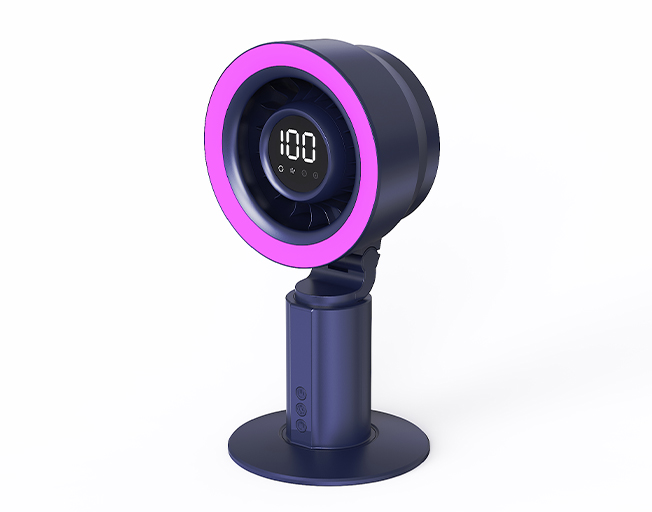
Our HZ-Z12 desk fan combines a rechargeable design with RGB lighting and five-speed touch control for desktop use.
Which Conditions Change Fan Runtime?
Charge each sample according to the supplied instructions, then note charge indicator state and the time since charging finished. Test on a stable desk with unobstructed intake and outlet, away from unusual heat or direct sun. Record ambient conditions and any automatic mode changes. Where a fan supports oscillation or lighting, switch them on only if the chosen claim includes them.
Create separate runs for high, medium and low settings if they will be compared. A sample with a partially charged battery or different firmware can create a false difference. Note battery age and whether the unit has been cycled before. The worksheet should identify the exact model and configuration, not just a product family name.
For product lineups focused on battery capacity and lighting features, consider our HZ-Z15 fan rechargeable fan.
How Should a Sample Runtime Trial Be Run?
Start two or more matched samples at the same time if possible. Log start time, selected mode, any speed changes and the first sign of reduced performance. Stop according to the agreed endpoint, such as automatic shutoff or a documented loss of usable airflow. Do not silently change the endpoint midway through the trial.
A simple observation table can use columns for sample ID, charge method, speed, light, oscillation, ambient condition, start, end and abnormal events. Retain photographs of the settings. If a unit shuts down unexpectedly, capture the indicator and recharge behavior before resetting it. This makes a useful supplier report rather than a bare runtime number.
How Do Buyers Compare Test Results?
Compare only runs made under the same setup. Calculate elapsed time for each unit and show the spread, including any excluded result and the reason for exclusion. If the claim is for one mode, do not substitute a different mode because it produces a more favorable result. Repeat a doubtful run after checking charging and controls.
A buyer should also review handling: is the speed easy to identify, does the unit restart in the expected mode, and are instructions clear about charging? These observations affect the customer’s interpretation of runtime. Agree the wording and tolerance with the supplier before printing a package claim, then use the same protocol for later lot checks.
Our desk fan buying guide covers key considerations when choosing a rechargeable model for home or office use.
A buyer comparing two desk-fan samples might begin with the fan-only claim at a stated medium speed. Both units receive the same charging procedure, run on the same type of desk and start with their lights off. The tester records the mode shown on each unit and the point at which airflow falls below the agreed usable endpoint. In a second trial, RGB lighting is on because the package may make a combined-use claim. The results must be reported as two different conditions; the better fan-only number cannot stand in for the combined mode. If one unit stops much earlier, the team checks whether it started fully charged and whether an automatic timer was enabled. A repeat trial with the reason documented is more informative than quietly dropping the outlier from the report.
Use a single observation sheet for this trial. Its core fields are sample ID, charge method, speed, lighting, oscillation, ambient condition, start and end times, endpoint and abnormal event. The person making the observation should record the condition at the time, not reconstruct it from memory after the event. If a value is unavailable or a check could not be run, mark that field as pending and identify who will close it. Attach photographs or instrument files by their IDs, and retain the original version when a corrective action leads to a retest. This keeps the final decision auditable without turning the working checklist into a long narrative.
FAQ
Is Battery Capacity Equal to Runtime?
No. Capacity does not specify motor power, control losses or the cutoff point. A measured run under stated conditions is needed.
Should RGB Lighting Stay on During the Test?
If the product claim covers fan-plus-light use, yes. If it covers fan-only use, test lights off and state that condition clearly.
Can One Sample Represent a Production Lot?
One sample can reveal a problem but cannot describe production variation. Use multiple units and define the sampling plan with the buyer.
How Should a Fan Be Charged Before Testing?
Follow the supplied charging instructions, note indicator state and use the same method for every sample. Avoid assuming a short top-up creates a full charge.
What Should You Send for a Project Review?
Send the exact fan model, proposed claim, modes to be tested, sample quantity and worksheet. Ask the supplier to confirm the charging method and any automatic features that affect the endpoint. Keep raw start and end records with the final comparison, so later packaging or customer-service teams can explain precisely what was measured.
To discuss your sourcing needs, contact our team with your preferred features, expected order quantity and packaging requirements.


